How I Made Sunscreen from Green Tea
The Problem
Traditional sunscreens work well, but they have problems. Some chemicals in them can harm coral reefs. Others can irritate sensitive skin. I started wondering: is there something natural that can do the same job?
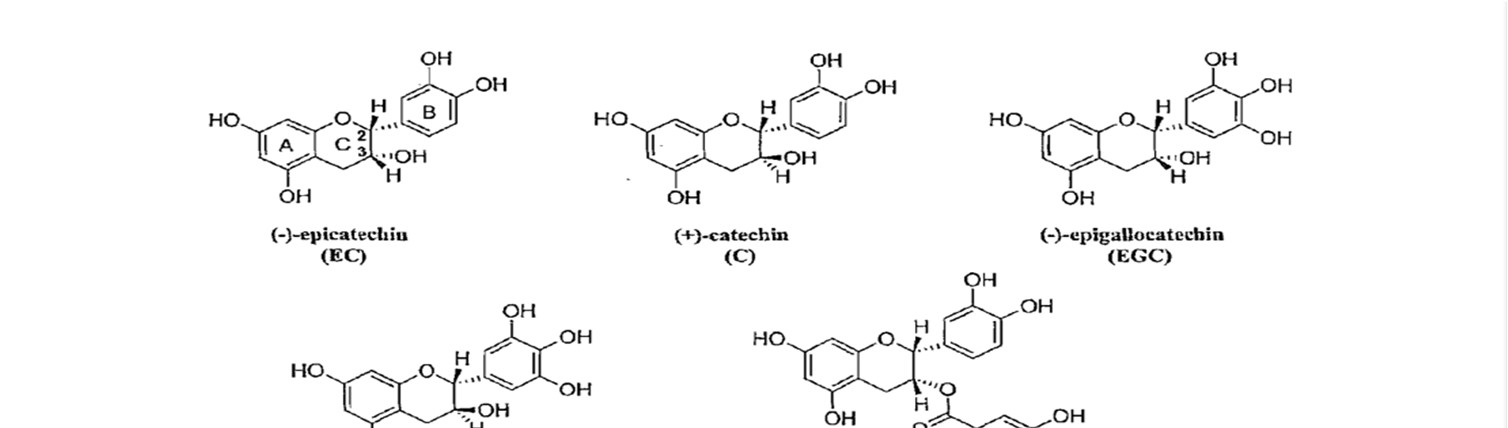
I found that green tea contains catechins, compounds that absorb UV light. If I could pull these out of tea leaves, maybe I could make a sunscreen that works and is safe.
The Science
Catechins do two jobs. First, they block UV light by absorbing it. Second, they quench excited molecules before those can cause damage.
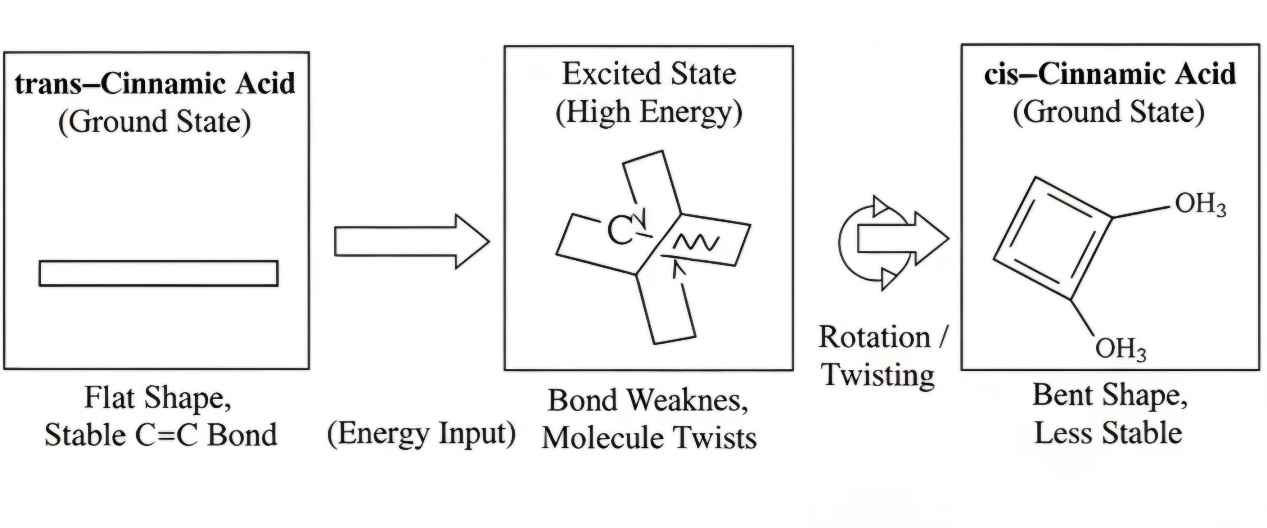
I chose trans-cinnamic acid as my model compound because its reaction to UV light is easy to measure. When UV light hits it, the molecule changes shape: this is called photoisomerization. If my green tea extract can slow down this reaction, it means it is protecting the molecule.
Building It
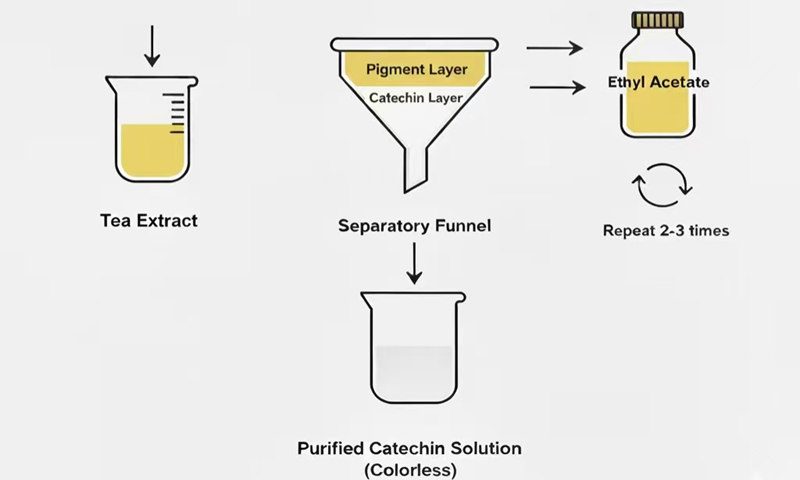
The first step was extracting catechins from green tea. I weighed 30 grams of tea leaves, soaked them in hot water for 15 minutes, then filtered the liquid.
The problem was that the extract was full of pigments: tea yellow and tea brown. These would interfere with my measurements. So I used ethyl acetate to remove the pigments, repeating the process until the solution was nearly colorless.
The Experiment
Here is where it got interesting. I did not have a spectrophotometer (those cost thousands of dollars). But I had a smartphone.
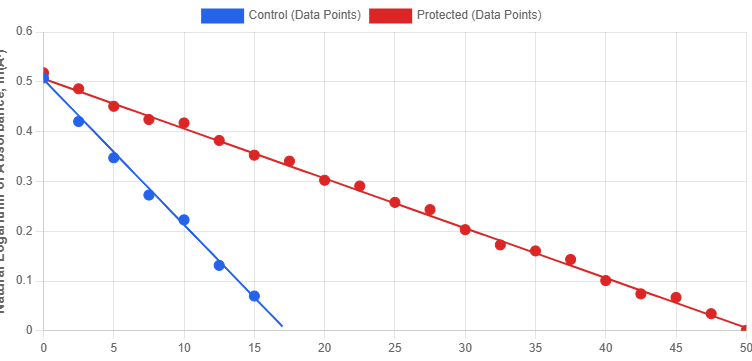
I set up two test tubes: one with just cinnamic acid (the control), and one with cinnamic acid plus my green tea extract (the protected group). I shone a UV flashlight on both and took photos every 2.5 minutes for 50 minutes.
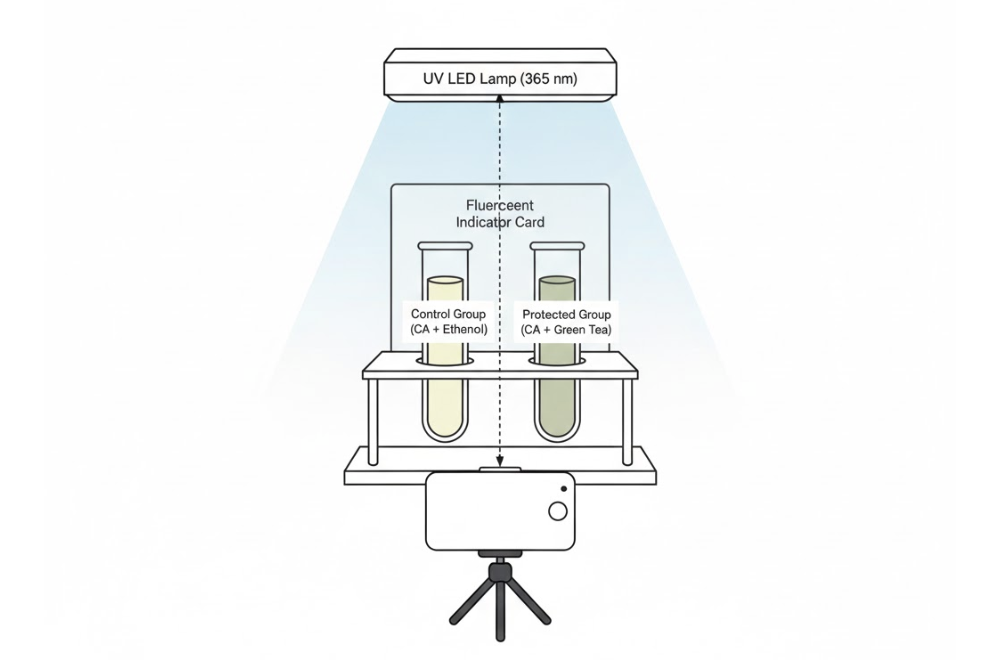
Then I used an app called Color Grab to measure the gray value of each photo. As the cinnamic acid reacted to UV light, the solution became clearer and the gray value increased. I could compare how fast this happened in the control group versus the protected group.

What I Found
The results surprised me. The green tea extract reduced the reaction rate by 66.4%. That means it was blocking two-thirds of the UV damage.
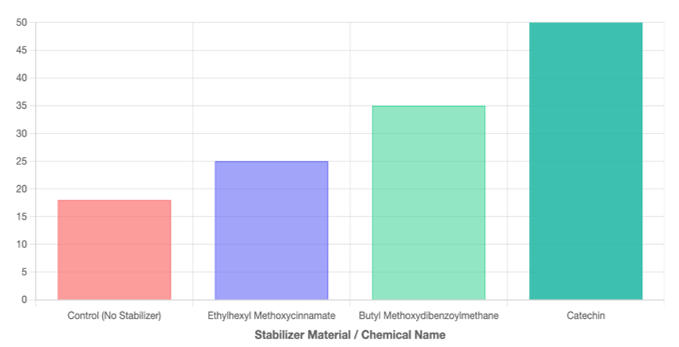
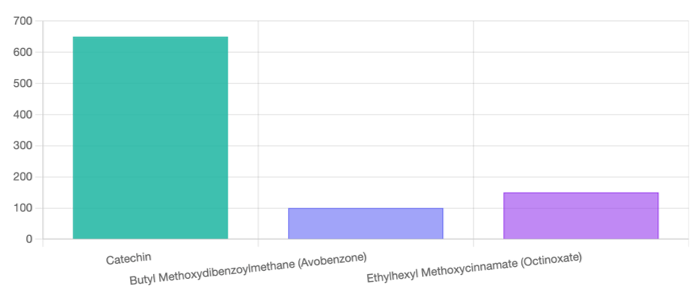
When I compared it to commercial sunscreens, my green tea extract beat a few of them. The catechins in green tea are actually quite good at absorbing UV light.
What I Learned
This project showed me that you do not need expensive equipment to do real science. A smartphone, a UV flashlight, and some tea leaves: that was enough to answer a meaningful question.
I also learned that nature already has answers for a lot of our problems. You just have to go look for them.
The judges at the competition loved this project. They said it was "the cleverest one" because I used simple tools to explain complex chemistry. I think the real lesson is that curiosity matters more than equipment.
← Back to Home